ThinkerWave

Flagship product · ThinkerWave Engine

It runs on your machine, on your problem, with your own model keys.

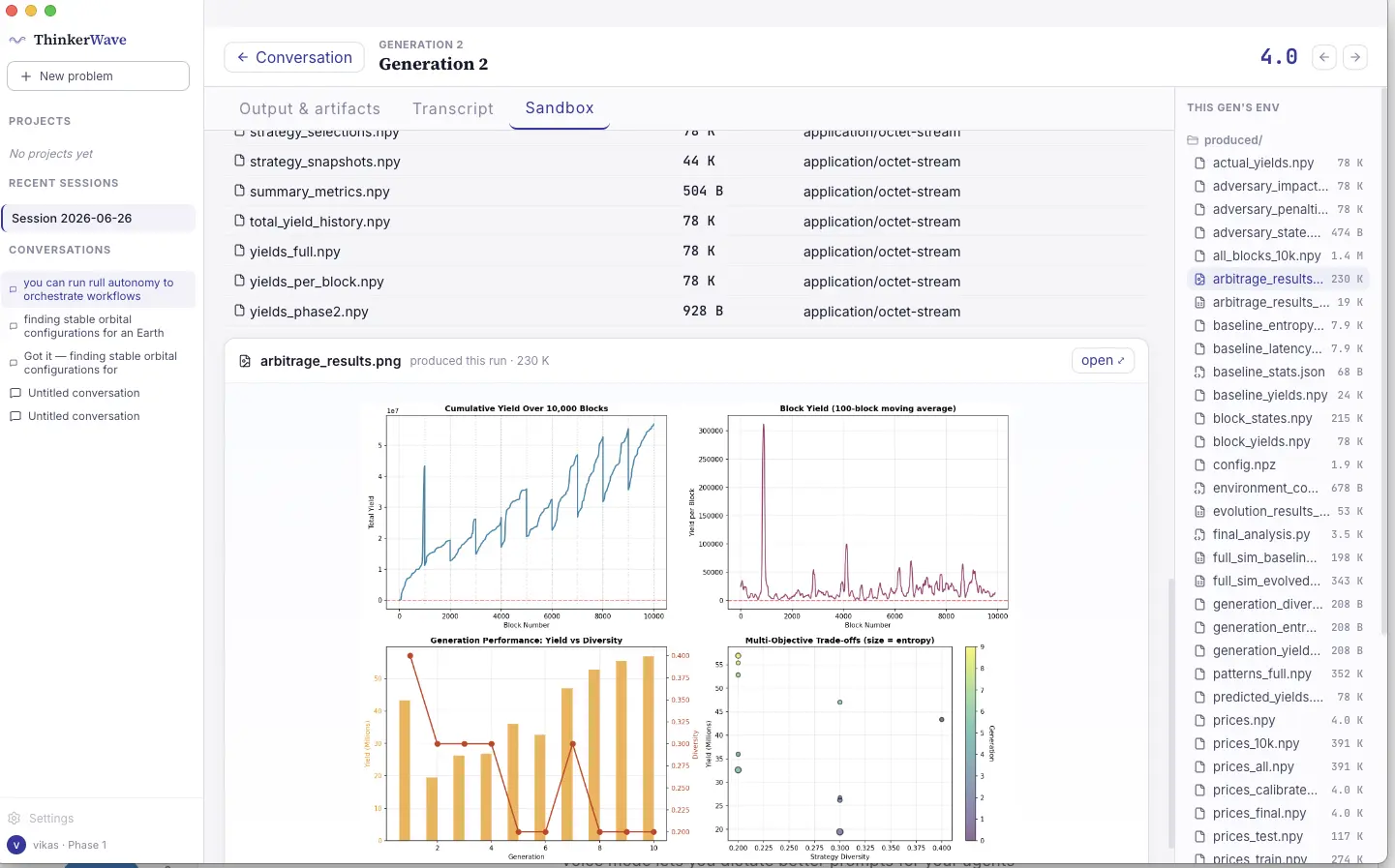
ThinkerWave Engine is our flagship product, a desktop application. You install it, point it at a problem and the data that goes with it, and it works, locally, until it has an answer it can defend.

The ThinkerWave desktop app, ready for a new problem, with sample problems to start from

The desktop app. Describe the problem the way you would to a colleague.

✳ What's in it

The engine

The system that works the problem, many approaches, discovered criteria, its own verification.

The workspace

Where you set up a problem, attach your data, and follow the work as it happens.

The run trail

Everything it tried, everything it discarded, and why, kept, so you can hand the reasoning to someone who has to sign off on it.

Product · What you hand it

Product · What you hand it

The problem, your data, your keys. Nothing else.

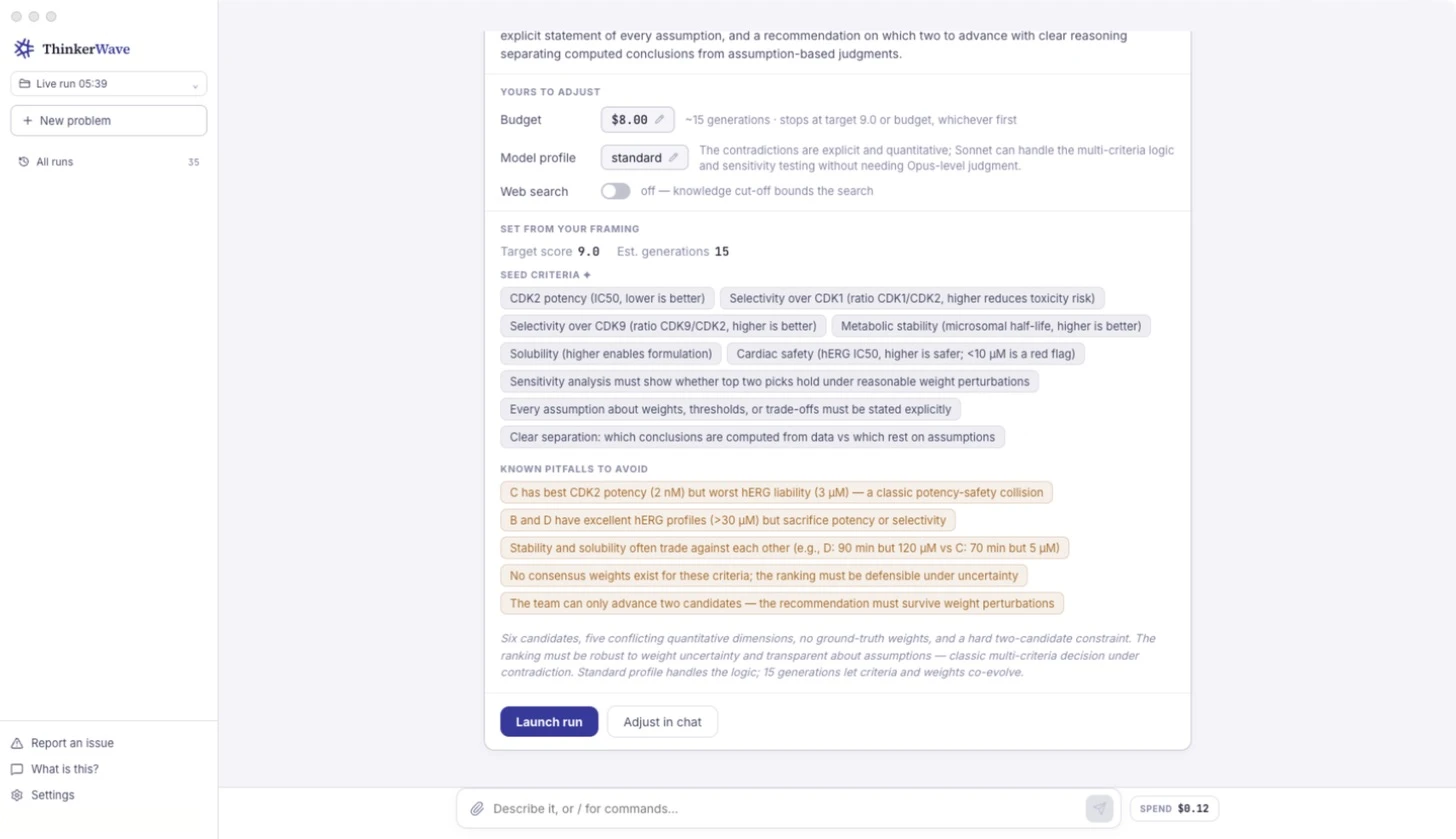
  • The problem, described the way you'd describe it to a colleague. No prompt engineering.
  • Your data, spreadsheets, CSVs, PDFs, documents.
  • Your own model credentials. You keep the account and the spend visibility.

Shown: Chat Wave turning a drug-discovery question into a run plan, with the criteria and the pitfalls it will check.
Product · What you get back

Product · What you get back

An answer that shows its work, or an honest refusal.

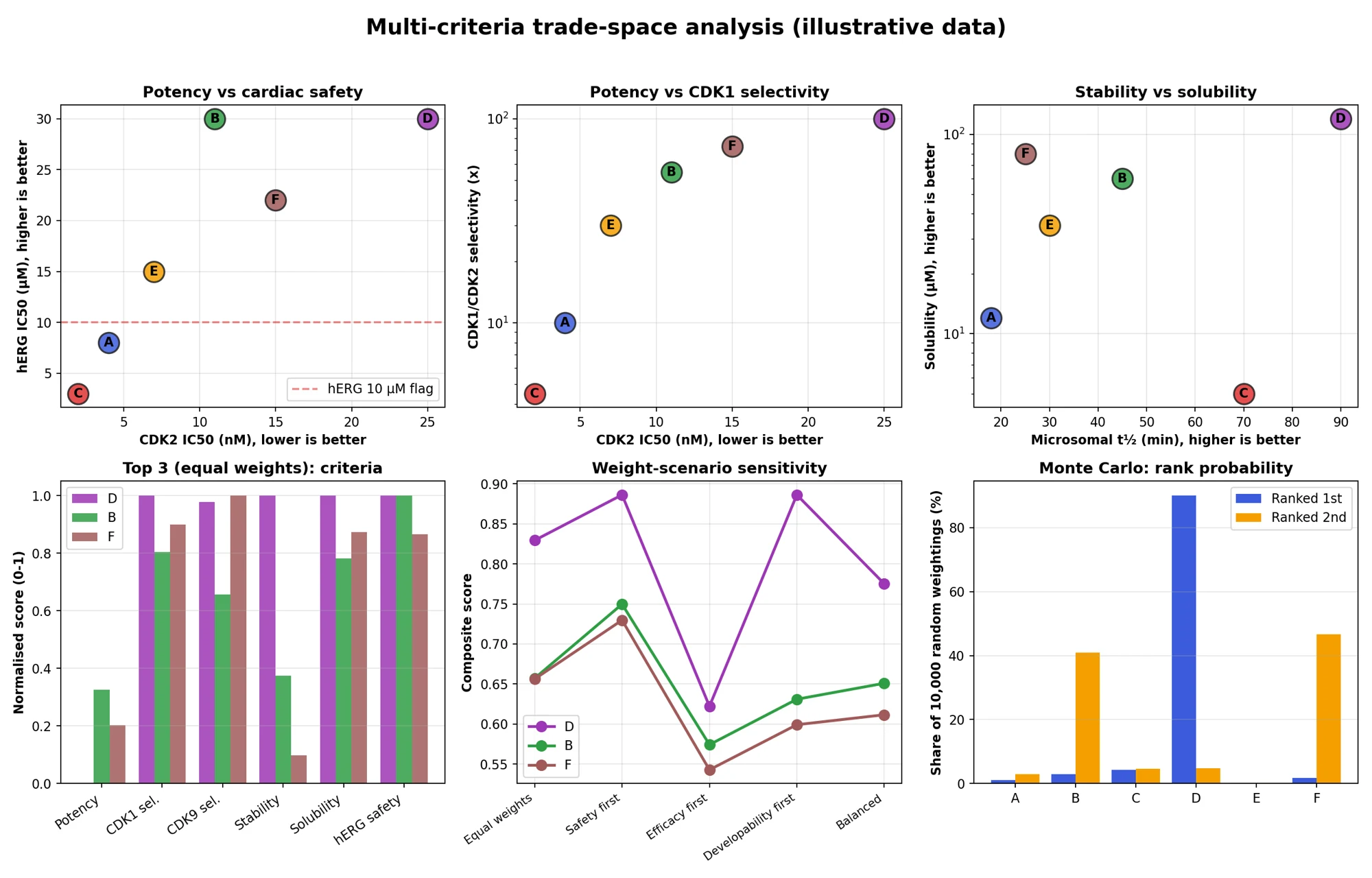
  • The answer, with the reasoning behind it.
  • The criteria it ended up judging against, including the ones it discovered.
  • The trail: what it tried, what it discarded, and why.
  • Or, when the question is malformed, a refusal and the reason, not a confident number that shouldn't exist.

Shown: the trade-off analysis for six drug candidates, including how the ranking holds up as the weights change. Illustrative data.

✳ A real run, end to end

What actually happens between the problem and the answer.

01

The problem goes in

Described the way you would describe it to a colleague, with the data attached. No prompt engineering.

02

Independent angles

The engine works the problem from genuinely different framings, discarding its own assumptions and trying again, each attempt shaped by every failure before it.

03

A contradiction appears, it forks

Two credible directions genuinely conflict, so the run splits. Each branch evolves on its own instead of one being abandoned early.

04

Branches evolve, criteria grow

As the branches work, the engine surfaces criteria nobody specified at the start and builds checks against its own output.

05

Merge, verify, answer

The branches converge: what each discovered is merged, the result is checked against the evidence, and the answer arrives with its full run trail.

The map of how it got there, the forks, the merges, the criteria that grew along the way, is part of the answer. That's the run trail.

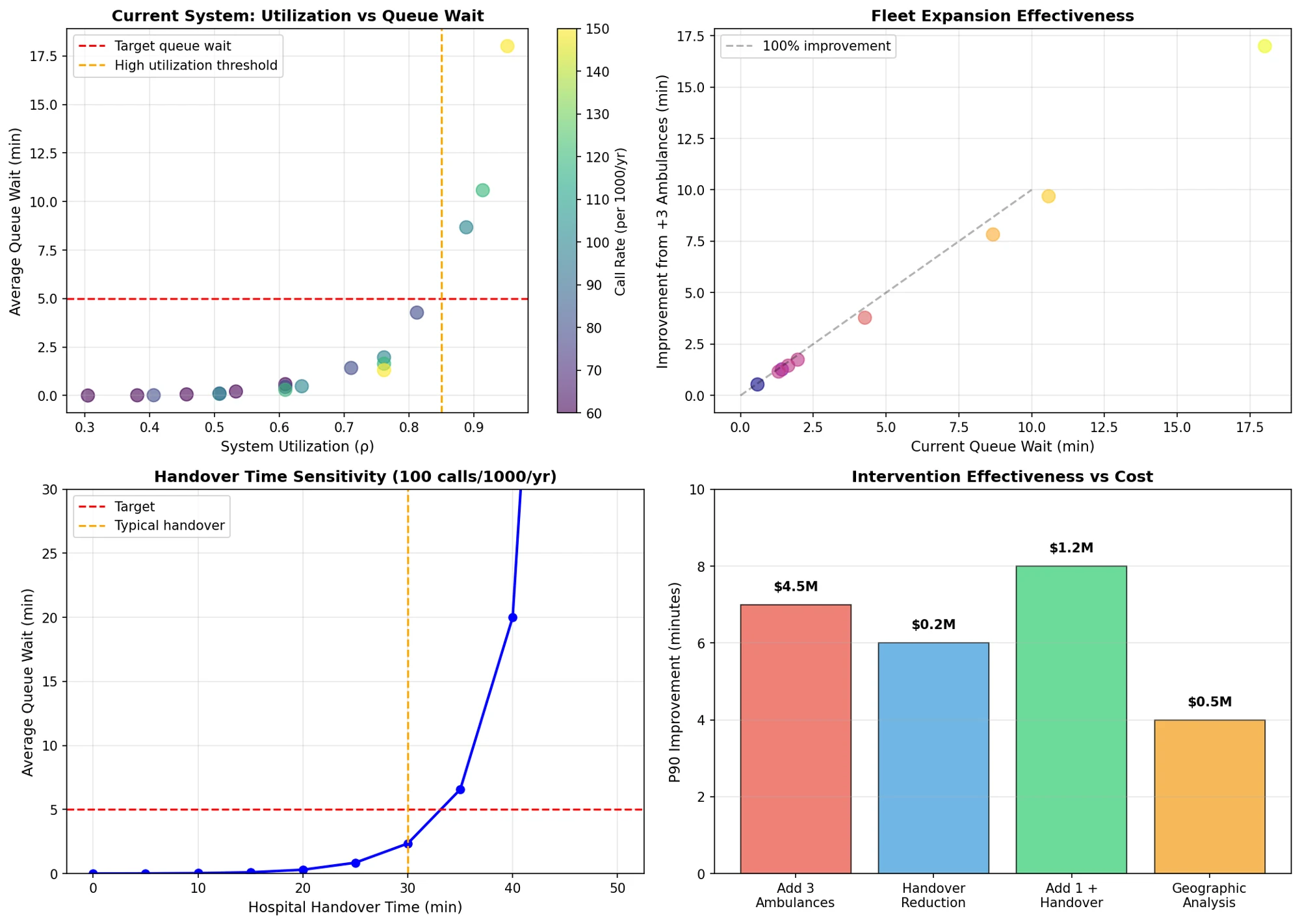
Charts from a sample run on ambulance response times: utilisation against queue wait, the effect of adding three ambulances, sensitivity to hospital handover time, and the cost-effectiveness of each intervention.
From a sample run: should a city buy three more ambulances? The engine tested fleet size, station coverage and hospital handover time, and found handover time was the binding constraint. The figures rest on assumptions it stated, because the problem gave it no real call data.
The ThinkerWave Engine setup screen

✳ What it needs to run

SystemmacOS 12+ on Apple Silicon, 64-bit Windows 10 or 11, or an x86_64 Linux desktop.
Model accessYour own API credentials, for the model provider you choose. You keep the account and the spend visibility.
SetupIt installs what it needs into a project folder itself. No Docker, no admin rights.
NetworkWith your own key, model calls go only to the provider you configure, and your data is never sent to ThinkerWave.

Put it on your hardest problem.